In brief: The Gates Foundation has committed at least $1 billion over the next two years to expand access to AI-enabled work in health, education, agriculture and underserved languages. It announced the plan in Seattle on September 14 alongside its 2026 Goalkeepers report. No Moroccan project or grant was named.
The pledge is both a funding decision and a test of governance. The foundation says AI should narrow gaps, while Bill Gates warns that governments are not ready for job disruption, cyber risks and highly engaging systems.
What the Gates Foundation AI funding will support
The Gates Foundation said it plans to spend at least $1 billion over the next two years on artificial intelligence and AI-enabled solutions. The announcement accompanied the 2026 Goalkeepers report, titled “AI, Equity, and the Choice We Can’t Delay.” The report asks whether the next generation of AI will widen existing inequalities or help more people obtain better health, learning and economic opportunities.
The timing matters for Moroccan readers. The press release was dated September 14 in Seattle and distributed at 22:18 UTC. That was 23:18 in Casablanca, so the announcement falls in the extended 24-hour window for this daily edition rather than the local calendar day’s opening hours.
A commitment is not the same as a list of grants. The foundation has not published, in the materials reviewed, a complete allocation by country, recipient, product or timetable. The $1 billion is therefore a funding direction and a budget commitment, not proof that a Moroccan startup, school, hospital or ministry has been selected.
The foundation’s own Goalkeepers site frames the report around a choice: AI can deepen inequity, or it can expand human potential. That language is broad by design. It sets a test for future programmes, but it does not guarantee that a tool will be accurate, affordable or available in every language.
Where the money is expected to go
The foundation says the effort will focus on practical uses rather than AI as an abstract technology. Reporting by the Associated Press describes health, education, agriculture and language inclusivity as central areas. Reuters also reported that the foundation wants AI access and outcomes to improve in developing regions.
In health, the possible applications range from decision support for health workers to tools that help people find information sooner. Such systems can be useful when they extend scarce expertise. They can also be dangerous when a model presents a guess as a diagnosis, or when a health worker cannot see the evidence behind a recommendation.
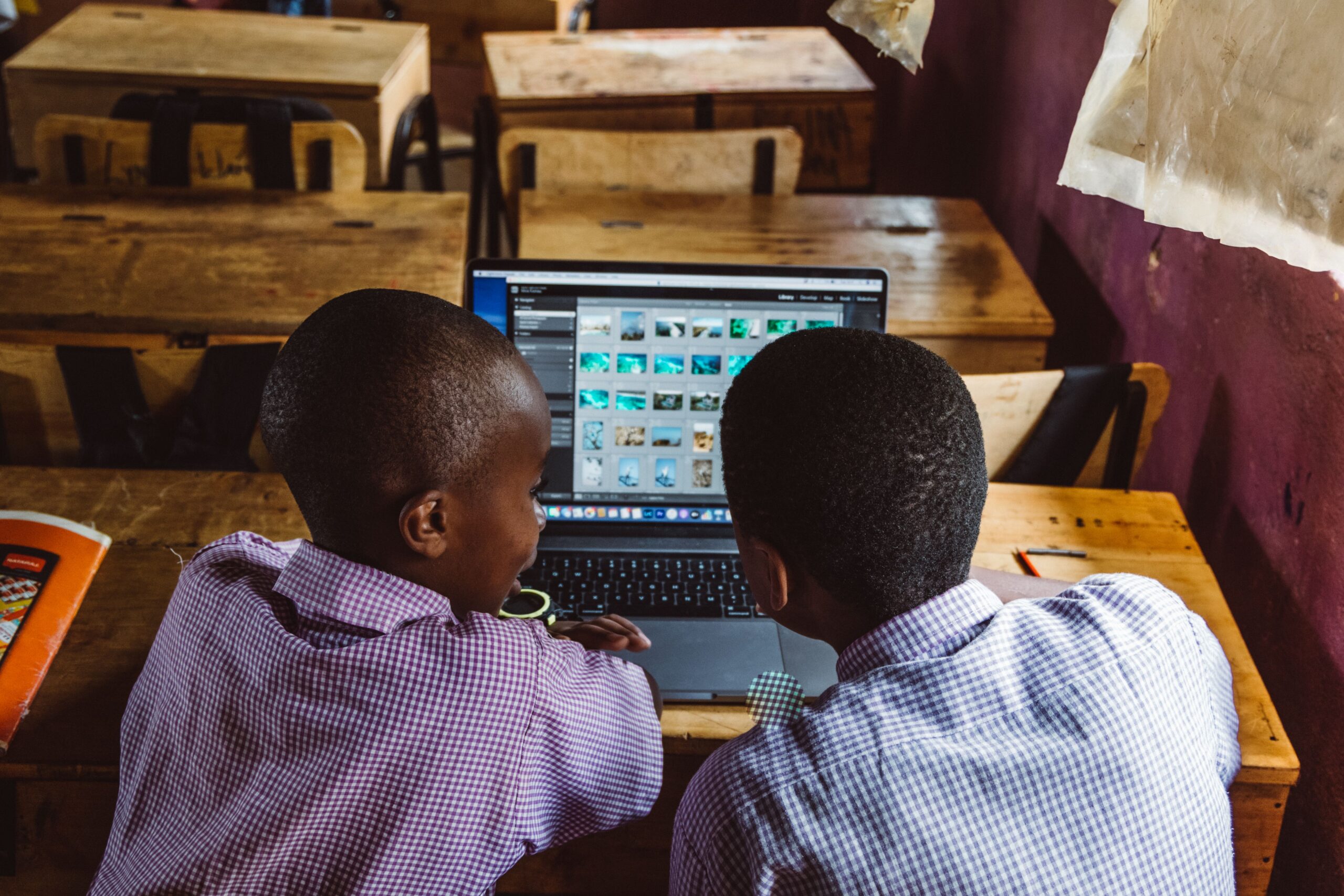
In education, AI can help translate material, provide practice or support teachers with routine preparation. It cannot by itself fix overcrowded classrooms, missing devices, weak connectivity or a shortage of trained educators. A language model that performs well in English may still fail when a lesson depends on local expressions or a student’s home language.
In agriculture, a phone-based assistant could help a farmer interpret an image of a crop or organize advice about weather and disease. That potential depends on local data, reliable connectivity, agronomic validation and an easy way to reach a human expert. A demonstration is not the same as a dependable service for a farm under pressure.
Language access is a technical and policy problem at the same time. A model needs enough representative text, speech and evaluation data to work safely. Translation into a language is not enough if the system misses dialect, context, names, cultural references or the difference between formal and everyday speech.
Partnerships are part of the plan, not the result
The Associated Press reported that the foundation’s initiative includes partnerships with OpenAI, Anthropic and Google, as well as work to collect data in underrepresented regions. Those partnerships may provide models, technical support or distribution. They do not remove the need for local institutions to set priorities and check outcomes.
The partnership model also raises questions about bargaining power. A nonprofit may bring funding and a global network, while technology companies bring models and infrastructure. The people who use the resulting service may have the least influence over its training data, operating rules or price.
The foundation has not said that every project will use a commercial model. It has also not published a single technical architecture for the programme. Readers should therefore distinguish a reported partnership from an available product, and a funding target from a confirmed deployment.
Why equity is difficult to measure
Access is more than putting an AI chatbot on a website. Users need a suitable phone or computer, electricity, data service, an interface they understand and a reason to trust the answer. Health workers and teachers need time to learn the system. Institutions need procurement, security and a way to correct mistakes.
The quality of training data is another constraint. If a model sees little information from a region, it may misunderstand local names, crops, diseases or social situations. The foundation’s emphasis on underrepresented data acknowledges that the problem is not solved by translating a high-income country’s dataset after the fact.
Evaluation must also measure harm. A project may report more interactions while missing women, rural communities or people with disabilities. A language model may be fluent but provide worse advice in a minority language. A health tool may be popular while failing the people with the most complex needs.
There is a final question of continuity. A philanthropic grant can pay for a pilot, but a ministry, school system or clinic must maintain the service after the grant period. Sustainable programmes need budgets, local technical staff, clear ownership of data and an exit plan if the technology does not perform.
Gates’ warning about an unprepared world
The funding announcement came alongside a more cautious message from Bill Gates. In a Reuters interview, he said governments worldwide are behind the pace of AI change. He pointed to possible job displacement, cyber threats and addictive AI companions, while still arguing that AI could improve lives in developing regions if access is handled fairly.
That warning distinguishes optimism about use cases from confidence in the institutions that deploy them. A tool can be impressive and still be deployed into a workplace without a training plan, a school without a teacher’s control or a public service without an appeal process. The foundation’s pledge will be judged partly by how it deals with those institutional gaps.
Government readiness matters because philanthropy cannot set every rule. Public authorities decide how health data can be used, what schools may purchase, how workers are protected and how citizens challenge an automated decision. The foundation can fund experiments, but it cannot substitute for public accountability.
The case for scrutiny of private leadership
The Associated Press also reported criticism of private foundations leading technology solutions that affect public welfare. The criticism is not a claim that the pledge has failed. It is a question about who defines equity, whose data is collected and who controls the system after the first grant.
A credible programme would publish selection criteria, geographic coverage, language targets, evaluation results and the limits of each tool. It would identify when a project is a pilot and when it is being used for a consequential decision. It would also make room for local researchers, civil society organisations, educators and health workers to reject an approach that does not fit.
This transparency is useful for funders as well as recipients. A large headline number can attract attention, but the practical measure is whether the money improves outcomes without creating a new dependence on a supplier. The foundation’s report creates an agenda. The implementation will provide the evidence.
What This Means for Moroccan Students, Startups, Founders and Citizens
For Moroccan students and learners, the long-term opportunity is better access to tutoring, translation and learning material. The immediate reality is narrower. The foundation has not announced a Moroccan education programme, and a global pledge does not make a new tool available in Moroccan schools. Students should treat AI output as assistance, check sources and protect personal information.
For Moroccan startups and founders, the pledge may create future calls for proposals, research partnerships or pilot opportunities in health, agriculture, education and language technology. There is no evidence yet of an open Moroccan funding round. Founders should watch the foundation’s official channels, prepare measurable local use cases and avoid presenting the pledge as committed capital for their company.
Developers and technology professionals may find opportunities in data collection, evaluation, model adaptation, translation and deployment. Work on Arabic, Moroccan Darija and Amazigh language technology could matter if a future programme seeks broader linguistic coverage. That is a possible direction, not a confirmed Gates Foundation workstream in Morocco. Professionals will need consented data, strong benchmarks and tools that can run under local security requirements.
For businesses and SMEs, the eventual benefit could be lower-cost support in areas such as customer service, training, crop advice or document workflows. The pledge itself does not announce a product, price or Moroccan distributor. Businesses should therefore plan around services they can access now and regard future AI funding as a market signal rather than a budget assumption.
For citizens, better language support and health or education tools could matter in daily life if they are accurate and affordable. The risks are equally concrete: profiling, weak privacy controls, incorrect advice and services that work better for connected urban users than for rural communities. Citizens need clear notices, human alternatives and a way to challenge an automated result.
For policymakers and public institutions, the message is to prepare before procurement. A Moroccan programme would need rules for sensitive data, independent testing, language coverage, cybersecurity, accessibility and responsibility when a model is wrong. The foundation’s international pledge may support future work, but it does not decide Morocco’s digital priorities or replace national oversight.
Moroccan Tech News has tracked the market’s changing expectations in its report on the AI slowdown. The Gates announcement adds a different question: not only how quickly AI advances, but who receives the compute, data, language support and public benefit when it does.
What happens next
The next evidence should come from programme documents rather than slogans. Watch for the foundation’s grant calls, named recipients, countries, technical partners, language commitments and evaluation methods. It will also be important to see whether funding supports open standards and local capacity or mainly buys access to closed platforms.
A second signal will be how projects handle failure. A responsible health or education pilot should publish limits and adverse findings, not only successful demonstrations. It should explain who supervises the system and how a user can get a human answer.
Finally, governments and local institutions will need to state what they want AI to do. A philanthropic offer can accelerate a well-defined public goal. It cannot create that goal, provide legitimacy for every deployment or guarantee a fair outcome by itself.
Frequently asked questions
What is the Gates Foundation’s $1 billion AI commitment?
The Gates Foundation says it plans to spend at least $1 billion over two years on AI and AI-enabled solutions intended to improve access and outcomes. The announcement does not publish a complete list of grants or recipients.
Is the money going to Moroccan startups or institutions?
No Moroccan recipient was named in the materials reviewed for this report. The pledge may create future opportunities, but it should not be treated as confirmed funding for a Moroccan company or public institution.
Which sectors are involved?
The foundation and reporting about the announcement point to health, education, agriculture and language inclusivity. Specific projects, budgets and technical systems will need to be verified when they are announced.
Why does language matter for equitable AI?
A system can translate words and still misunderstand dialect, context or local terminology. Useful language support needs representative data, testing by speakers and a way to correct harmful or inaccurate output.
Can private philanthropy replace government AI policy?
No. Foundations can fund research and pilots, but governments remain responsible for public rules, procurement, data protection, worker safeguards and appeal processes. A partnership needs local accountability.
Conclusion
The Gates Foundation’s $1 billion plan is significant because it puts money behind an argument about who should benefit from AI. It is also incomplete news until the foundation identifies recipients, projects and measures. For Morocco, the relevant opportunity is long-term and conditional: stronger language, health, education and agriculture tools could emerge, but no immediate local programme has been confirmed. The next test is whether the pledge builds durable local capacity and public trust.