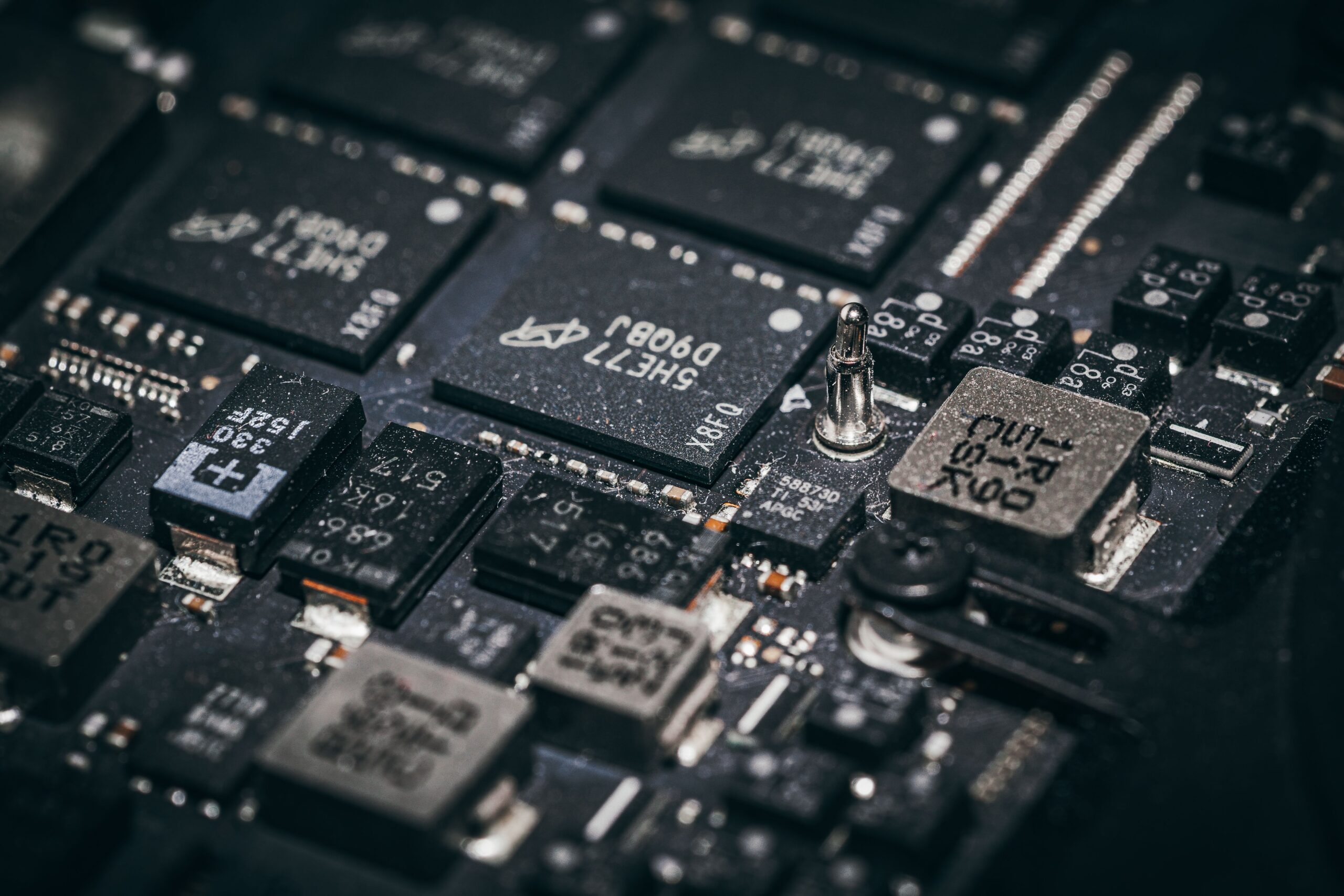
In brief: Dutch startup Axelera AI has launched Europa, a second-generation AI accelerator aimed at enterprise inference. The company announced the chip architecture on September 15 alongside validated Dell and Supermicro systems. Reuters reports several AI-factory supply contracts and more than 600 customers. No Moroccan customer, distributor or deployment was identified.
Europa is designed to run trained models near business data rather than replace large-scale training systems. For Morocco, the launch is an infrastructure signal: local adoption would depend on price, software support, import channels and measured performance, none of which the announcement settles.
What Axelera announced
Axelera AI announced the Europa architecture on September 15. Its newsroom described a growing ecosystem of original equipment manufacturers, original design manufacturers and technology partners. It highlighted validated systems with Dell and Supermicro, two established server companies.
Reuters reported that Axelera also signed several contracts to supply chips to AI factories. The news agency did not receive precise details of each contract. Chief executive Fabrizio Del Maffeo told Reuters that the deals were worth tens of millions of dollars in total.
That wording needs care. “Tens of millions” describes the value of signed deals as reported by the chief executive. It is not the same as booked revenue, delivered systems or a guarantee that every potential order will close. Reuters also reported that Axelera is pursuing $1.5 billion in potential sales, while noting that this figure does not represent orders or revenue.
Axelera was founded in Eindhoven in 2021 and has raised more than $450 million, according to Reuters. The company says more than 600 customers now use its chips in security, defence, AI-factory and enterprise settings. These customer and funding figures come from the company and Reuters reporting; they are not an independent market-share measurement.
What an AI factory actually does
An AI factory is a data centre or scientific computing centre dedicated to running and training artificial intelligence software. The phrase describes an operating model as much as a building. It brings together servers, accelerators, storage, networking, software and power so organisations can turn data into model output at scale.
Europa is aimed mainly at inference. Inference is the stage when a trained model answers a question, analyses a camera frame, summarizes a document or generates a result. Training creates or adjusts the model and usually requires much larger datasets and longer runs. A company can therefore need different hardware for training and for the everyday service that follows.
Inference close to the data has practical advantages. A factory may not want video sent to a public cloud, a hospital may have strict controls around records, and a business may need predictable response times. Local processing can reduce network traffic and support data-control goals. It does not automatically make a system secure, private or cheap. Those outcomes still depend on software, configuration and governance.
Axelera’s first-generation Metis products were designed for edge applications, such as analysing security data at a site. Reuters describes Europa as the heavier option for corporate servers. The company presents a future Titania chiplet architecture for data centres and supercomputers. The three names show the intended range from a device or machine to a rack-scale system.
The Axelera Europa chip and its published figures
Axelera’s product information says Europa doubles the number of AI cores compared with Metis and includes sixteen vector units. It also places pre-processing and post-processing on the chip. In plain terms, some steps around a model can happen closer to the accelerator instead of moving as much work through the host processor.
The company lists 629 TOPS per chip, where TOPS means trillions of operations per second. It lists a 45-watt thermal design power for a card, typical power of 30 to 40 watts, memory of up to 64 gigabytes per chip and capacity for models up to 32 billion parameters. These figures describe the company’s published specifications. They do not by themselves predict the speed, cost or quality of a complete server.
Axelera also lists 53.5 tokens per second for a Qwen3-30B-A3B workload. Its product information labels that result as simulated. It specifies an 8-bit workload, a 1,024-token context, an 8-bit key-value cache and a single-user, one-chip setup. The figure should therefore be treated as a pre-silicon estimate under stated conditions, not an independent production benchmark.
That distinction is central in an AI-chip market full of headline numbers. Performance can change with the model, precision, batch size, memory traffic, software version, host processor and cooling. A buyer should ask for measured results on the exact workload, a full power figure for the system and the cost of the software stack.
Why Dell, Supermicro and AI factories matter
A chip becomes easier to buy when it appears in a validated system. Server partners can handle chassis, cooling, power delivery, firmware and support. Customers can then compare a complete appliance rather than assembling an accelerator from a specification sheet.
Reuters says Europa can be used in specified Dell and Supermicro products. The sources do not establish that every server from either company supports the accelerator. They also do not establish that a Moroccan buyer can order a configured system locally. Availability, warranty, customs, technical support and distributor arrangements remain separate questions.
Europe’s AI-factory programme adds a public-policy layer. Reuters reported that the European Union is adapting existing supercomputing centres into AI factories to give European firms and scientists more access to computing power and narrow the gap with the United States and China. Axelera is working with Dell and system integrator E4 on the EU-backed IT4LIA project in Italy and the MeluXina project in Luxembourg, according to the report.
For Europe, the issue is not only raw speed. It is also who controls the hardware, where sensitive workloads run and whether local companies can build a supply chain around AI services. A European accelerator can support those goals, but it still needs software compatibility, long-term funding, production capacity and customers willing to test a new platform.
The commercial case and the unanswered questions
Axelera is presenting Europa as part of a broader stack. Its website describes a software development kit, support for many models and products that range from embedded modules to server cards. A software stack matters because customers need to move a model from a research environment into a monitored, updateable service.
The company’s customer count and contract figures suggest commercial momentum, but they do not reveal utilisation or profitability. More than 600 customers can include pilots, small deployments and large production accounts. Deals worth tens of millions can be spread across several contracts and delivery dates. The $1.5 billion potential-sales figure is an ambition, not a sales ledger.
The first hard test will be Europa’s measured performance. The company’s public page distinguishes measured Metis results from simulated Europa results and notes that some Europa performance remains to be confirmed. Buyers should look for independent tests, model coverage, software maturity, supply timing and the cost of a complete rack.
The second test is system-level energy use. A 30 to 40-watt typical figure for a card does not include every server component, networking equipment, storage, cooling or facility cost. Lower accelerator power can help, but the business case needs a full workload and total-cost comparison against GPUs, CPUs or another inference accelerator.
A third test is resilience. Customers need a vendor roadmap, spare parts, security updates, driver support and a way to migrate models if the platform changes. Inference hardware is not an isolated chip purchase. It becomes part of a production dependency.
What This Means for Moroccan Students, Startups, Founders and Citizens
The Moroccan connection is indirect and long-term. The sources reviewed do not identify a Moroccan contract, partner or distribution channel for Europa. A Moroccan company should not interpret the launch as proof that the card is available locally or that a domestic AI factory is being supplied.
The opportunity is in the type of workload Europa targets. A Moroccan manufacturer could eventually evaluate local computer vision for quality control. A logistics or port operator might explore inference near cameras and sensors. An agricultural technology company could test models on equipment or in a regional data centre. These are possible use cases, not announced deployments.
For students and learners, the hardware story is a reminder that AI careers include systems work. Skills in Linux, model optimization, data pipelines, computer vision, networking, power management and responsible deployment can matter even when a student never designs a chip. The launch does not announce Moroccan training seats, internships or academic access.
For Moroccan startups and founders, a smaller inference platform could become useful when cloud costs, latency or data-control rules make a remote service unattractive. Founders would need to confirm pricing, import arrangements, local support, model compatibility and financing. They should test a real workload instead of choosing on TOPS alone.
For developers and technology professionals, the important question is the SDK. They should look for supported frameworks, quantization tools, observability, containers, APIs and documentation. A model that runs in a lab but is hard to update or monitor is not a production advantage. No new Moroccan developer programme was announced with Europa.
For businesses and SMEs, on-premises inference can offer more control over customer or operational data, but it transfers responsibility to the buyer. The company must secure the server, patch it, control access, log use and plan for failures. Hardware sovereignty is not the same as privacy by default.
For citizens and consumers, the impact is not an immediate new service or price. If local organisations later adopt more inference at the edge, people may notice faster computer vision, smarter industrial systems or services that send less raw data to the cloud. They may also face more automated monitoring. Transparency and a clear purpose will matter.
For policymakers and public institutions, European accelerator news reinforces the value of procurement standards. A Moroccan public AI project should ask about energy, security updates, data location, language support, audit access, vendor lock-in and the ability to replace a system. The country can learn from the AI-factory model without copying Europe’s institutions or assuming the same supply chain.
Moroccan Tech News has previously covered the semiconductor side of the AI buildout in its article on ASML’s High-NA EUV systems. Europa is a different layer of the stack. ASML makes lithography equipment for chip production, while Axelera is trying to sell an accelerator that runs models in deployed systems.
What to watch next
The next milestone is not another headline specification. It is evidence from silicon and complete systems. Watch for measured Europa benchmarks with named workloads, software versions, power conditions and comparisons that independent buyers can reproduce.
Also watch the partner list and the order path. A validated server is more useful when customers know the exact configurations, lead times, support model and regions served. A product page or press release alone cannot answer those commercial questions.
Finally, follow the European AI-factory deployments. If these sites become stable customers, they could create a reference market for European inference hardware. If projects remain pilots, the sector may need more time before the benefits of local accelerators reach smaller organisations or markets outside Europe.
Frequently asked questions
What is the Axelera Europa chip?
Europa is Axelera AI’s announced second-generation AI processing unit. The company positions it for heavier inference workloads on corporate servers, with partner systems that include specified Dell and Supermicro products.
Is Europa used for training AI models?
The launch focuses on inference, the stage where a trained model produces results. Reuters describes Europa as aimed at enterprise servers, while Axelera’s first-generation Metis targets edge applications. The sources do not present Europa as a replacement for every training system.
How fast is Europa?
Axelera publishes 629 TOPS per chip and a simulated 53.5 tokens per second on a specified Qwen3 workload. The tokens-per-second figure is a simulation, and other Europa performance remains subject to confirmation. Buyers need measured results for their own models.
Does Axelera have customers and revenue from Europa?
Reuters reports more than 600 customers using Axelera chips and deals worth tens of millions, based on statements from the company’s chief executive. Reuters also says the $1.5 billion potential-sales figure is not orders or revenue. The sources do not provide Europa revenue.
Can Moroccan companies buy Europa?
The reviewed sources do not confirm a Moroccan distributor, customer or local availability. A potential buyer would need to check Axelera or an authorised server partner for configuration, price, support and delivery to Morocco.
Conclusion
Europa gives Axelera a route from edge AI into corporate servers and Europe’s emerging AI-factory network. The launch has credible commercial signals, including partner validation and contracts reported by Reuters, but its most striking performance figure is still simulated. For Morocco, the news is a long-term infrastructure signal. The practical test will be measured performance, full-system cost, software support and a clear path for local buyers.
Leave a Reply