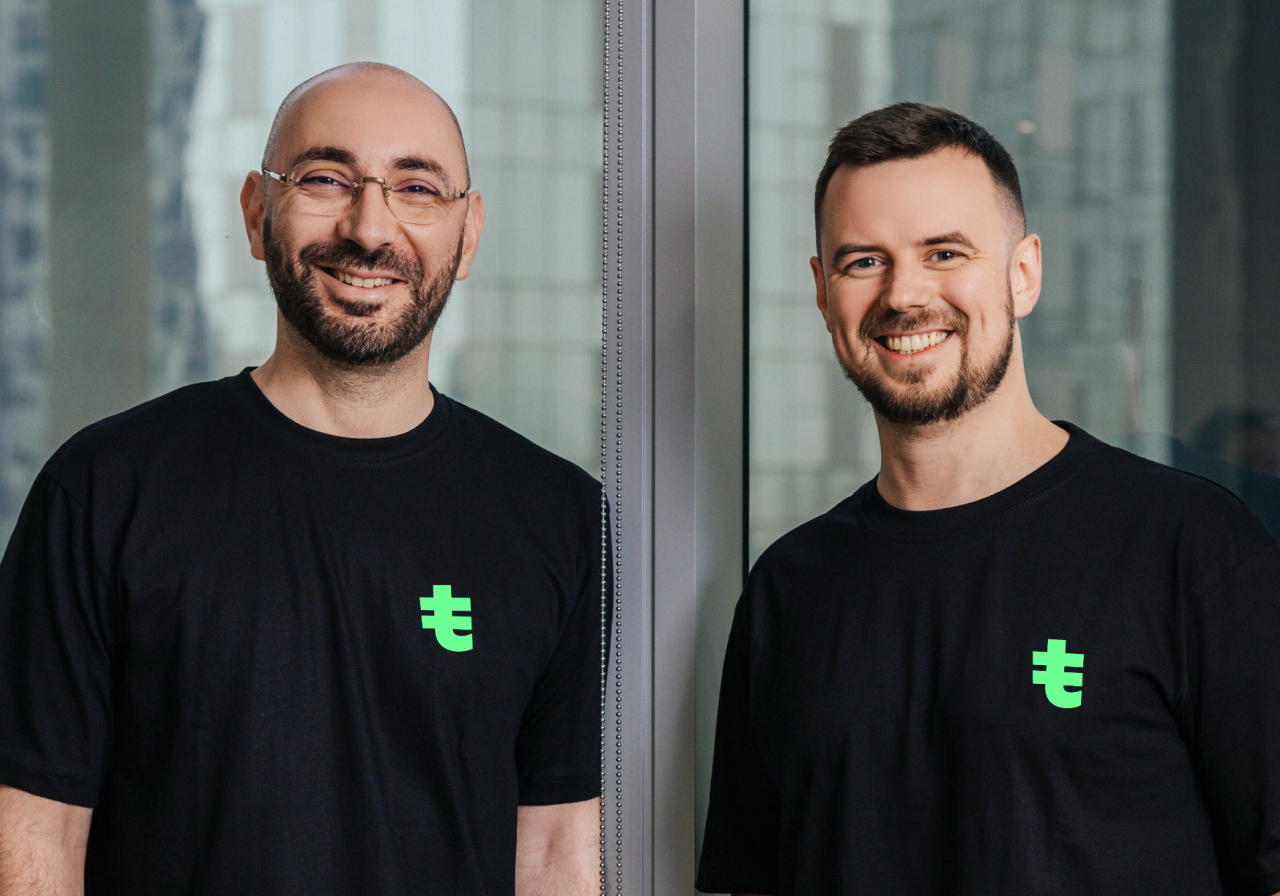
Saudi fintech Tabby has raised $233 million in a Series F equity round at a $6.5 billion valuation, doubling its valuation from the $3.3 billion level reached in early 2025 and giving the Middle East one of its largest private fintech financings of 2026.
The round was led by existing investor Blue Pool Capital, with participation from HSG, Wellington Management and Arbor Ventures. Tabby says the new capital will support its expansion beyond buy now, pay later into broader credit, spending and money-management services in Saudi Arabia and the United Arab Emirates.
The timing is notable. Tabby is no longer pitching itself simply as a checkout-financing company. It has accumulated financial licences, acquired a Saudi digital wallet, launched products that compete more directly with bank accounts and cards, and built enough transaction volume to argue that it is becoming a broader consumer-finance platform for the Gulf.
What Tabby’s $233 million Series F means
The financing gives Tabby a $6.5 billion valuation, according to both the company and Reuters. The company says it has been profitable since 2023, processes more than $18 billion in annualised transaction volume, serves 25 million registered users and works with 70,000 merchant partners.
Those numbers put Tabby in a different category from a typical regional startup. Its challenge is now less about proving that BNPL can attract users and more about turning that distribution into a durable financial-services business with multiple products and sustainable economics.
The round also includes a liquidity option for employees. Tabby says it has facilitated more than $100 million in employee share sales since 2023, allowing current and former staff to realise part of the value created before a public listing or acquisition.
From a checkout button to a financial platform
Tabby began with a relatively simple proposition: let shoppers split purchases into instalments at checkout. BNPL grew quickly in the Gulf because it matched a young, mobile-first consumer base, strong e-commerce growth and high smartphone adoption.
But BNPL alone is increasingly crowded. Banks, wallets, payment companies and other fintech startups now offer instalment products. That creates pressure on providers to find additional revenue streams and increase the frequency with which customers use their services.
Tabby’s answer has been to expand into a wider set of products. In Saudi Arabia, the Saudi Central Bank has granted the company consumer and SME finance licences. Those licences allow Tabby to finance larger purchases over longer periods and provide working capital to businesses.
The company also acquired Tweeq, a Saudi digital-wallet provider licensed by SAMA. That gave Tabby infrastructure and regulatory capabilities around accounts, cards and transfers rather than only point-of-sale financing.
In the UAE, Tabby obtained a Stored Value Facilities licence from the Central Bank of the UAE. It has used that foundation to launch Tabby Cash, a spending account positioned as an alternative to a conventional debit account, with a card, transfers and cashback.
Why the valuation doubled
Tabby was valued at $3.3 billion when it raised $160 million in Series E funding in February 2025. Reaching $6.5 billion roughly a year and a half later reflects both growth in the underlying business and investor confidence that the company can expand beyond its original BNPL category.
Several metrics support that case. Tabby now says it processes more than $18 billion in annualised transaction volume and serves 25 million registered users. Its 70,000 partners include large international and regional brands such as Amazon, SHEIN, Apple, IKEA, Samsung, Jarir and noon.
Profitability is also central to the investment story. Many fintech companies grew rapidly during the low-interest-rate era while remaining heavily loss-making. Investors have become more selective since then, particularly in lending-related businesses where funding costs, credit losses and regulation can quickly expose weak economics. Tabby’s claim that it has been profitable since 2023 therefore differentiates it from growth-at-all-costs models.
Why Saudi Arabia is central to Tabby’s strategy
Although Tabby was originally founded in the UAE, Saudi Arabia has become the center of gravity for the company. Its headquarters are in Riyadh, and the Kingdom is one of the largest consumer markets in the Gulf.
Saudi Arabia is also investing heavily in financial technology as part of its broader economic diversification agenda. Regulators have expanded licensing frameworks for digital payments, finance companies and wallets, while local consumers have adopted mobile banking and digital commerce rapidly.
For Tabby, direct licences matter because they reduce dependence on partner institutions and allow the company to control more of the customer experience. That can improve product speed and margins, but it also increases regulatory responsibility. A business that provides credit, holds customer funds or supports transfers faces a much higher compliance burden than a simple software platform.
The UAE is becoming the second pillar
The UAE remains Tabby’s other core market. Its Stored Value Facilities licence gives the company permission to hold customer funds and offer spending-account functionality. That shifts Tabby closer to the territory traditionally occupied by digital banks and payment accounts.
Tabby Cash is important because it increases engagement outside shopping moments. BNPL is used when a customer makes a purchase. A spending account, card and transfers can be used throughout the month. Higher usage frequency can deepen the customer relationship and create more opportunities to cross-sell other financial products.
The risk is that this also pushes Tabby into more direct competition with established banks, neobanks, wallets and global payment companies. The company will need to prove that its brand and user base translate into long-term primary financial relationships rather than occasional checkout usage.
What the funding says about MENA fintech
The Series F is significant beyond Tabby itself. It shows that large global investors remain willing to write substantial equity checks into Middle Eastern technology companies when those businesses can demonstrate scale, regulatory progress and credible unit economics.
MENA startup funding has historically been much smaller than the U.S., Europe or East Asia, with fewer late-stage private companies able to raise hundreds of millions of dollars. Tabby’s financing helps establish a regional benchmark for what a mature fintech company can be worth when it operates across large Gulf markets.
It also reflects the growing depth of the Gulf’s financial-technology ecosystem. Saudi Arabia and the UAE are competing to attract founders, capital and financial institutions, while sovereign investment funds and regional investors increasingly participate alongside global firms.
Could Tabby eventually go public?
A $6.5 billion valuation naturally raises the question of an initial public offering. CEO Hosam Arab told Reuters that there are no immediate plans for a listing and that the current priority is scaling the company’s core and newer financial services.
That is a reasonable position after a large private round. An IPO would impose additional disclosure requirements and expose Tabby to daily public-market valuation. Remaining private gives management more flexibility while it expands into regulated products whose economics may take time to mature.
Still, Tabby is now large enough that a future listing is likely to remain part of the discussion. Riyadh and Dubai are both trying to deepen their capital markets, and a major home-grown fintech listing could be strategically attractive to regional exchanges.
The risks behind the growth story
Fast growth in consumer finance always comes with risk. Tabby must manage credit quality while expanding into larger and longer-duration financing. Economic conditions, consumer spending and employment can affect repayment performance, while tighter regulation could change how BNPL and digital-credit products are marketed or underwritten.
Competition is another issue. Banks can bundle credit with existing customer relationships and lower funding costs. Global payment companies can bring scale. Local fintech startups can attack specific niches. Tabby therefore needs to maintain a product advantage while also keeping credit losses and customer-acquisition costs under control.
Regulation will become more important as the company broadens its product set. The Series F transaction itself remains subject to applicable regulatory approvals, including approval from the Saudi Central Bank.
Why this matters to Morocco
Tabby does not currently make Morocco one of its core operating markets, so the direct consumer impact is limited. The more relevant lesson is what the company’s trajectory says about building fintech in the wider Arab region.
Tabby grew by solving a narrow payments problem first, then used distribution, data and regulatory licences to expand into adjacent services. For Moroccan founders, that is a more useful model than trying to launch a full digital bank from day one. Financial products become significantly harder when they involve lending, deposits or money movement because regulation, risk management and capital requirements rise quickly.
Morocco has its own banking structure, payment regulations and consumer behavior, so Tabby’s products cannot simply be copied. But its progression from a focused checkout product toward a wider financial platform shows how a fintech can use one high-frequency wedge to build a broader relationship with users.
The funding also matters for regional investor perception. Successful large exits or late-stage valuations in MENA can make global capital more comfortable with technology businesses built for Arabic-speaking and Gulf markets. That effect does not automatically flow to Morocco, but it contributes to a broader regional technology narrative.
What happens next
Tabby now has the capital, licences and customer base to attempt a difficult transition: moving from a successful BNPL provider to a diversified financial platform without losing the discipline that made investors comfortable funding it.
The next indicators to watch are adoption of Tabby Cash and other non-BNPL products, the performance of longer-term consumer financing, growth in SME working capital, and whether profitability holds as the company expands.
If Tabby can convert a checkout relationship into a broader everyday financial relationship, its $6.5 billion valuation may look less like a premium for BNPL growth and more like a bet on one of the Gulf’s first major consumer-fintech platforms.
Leave a Reply